

 By: Ali Elizabeth Turner
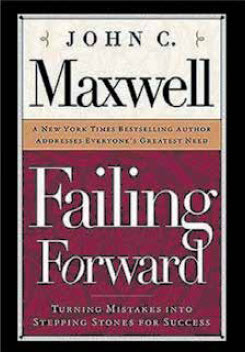
Over the 15 plus years that we have been doing the Ronnie column, it has been important to Mayor Ronnie to go through various books that have spoken to him, particularly in the realm of leadership. The unopposed master in the field of leadership training is John Maxwell, and for this edition we are going to talk briefly about his book with the uncomfortable title of Failing Forward. It is a timely tie-in to the kickoff month of the 14th Mayor’s Youth Commission, something that has developed into a resource not only for our community and its future, but has caught the attention of mayors nationwide. As we marveled at how quickly the time has gone and double-checked to make sure we had the annual number correct (14th), Mayor Ronnie told me about the process of putting together each year’s commission.
First of all, the mayor doesn’t pick those who are selected from the public schools, private schools, and homeschoolers. He reads the applications, he may make recommendations, but has no vote, just like in City Council. He also told me that this is not a “4.0 GPA-All-Star-Beauty-Queen-Quarterback-has-discovered-the-cure-for-cancer” type of selection process. (My words, not his.) “There have been kids with completely average GPAs, but there was just something about them that came through in their application, and we all knew that they needed to be a part of this year’s group,” he said.
Nobody likes to fail, but if kids and grownups can really embrace Maxwell’s premise, that “the difference between average people and achieving people is their perception of and response to failure,” by grace we will be able to flip the script on failure and turn it into something positive. This year, the Mayor’s Youth Commission kids are going to be learning just that courtesy of Dr. Maxwell. From the book, one of the examples of failure that ultimately became the triumph of someone else is that of the flying machine.
The short version is this: Dr. Samuel P. Langley was a brilliant professor of mathematics and astronomy, and was the director of the Smithsonian. He stood in line to be the guy who invented the manned flying machine and got it to stay in the air. He had the backing of his colleagues, along with our government, and if he had succeeded, the Wright Brothers and Kitty Hawk would have never been part of our history books. At first Langley endured the expected criticism, including when his prototype got caught up in the launch gear. Media called it “Langley’s Folly,” but Langley kept going. The Wright Brothers were nipping at the heels becoming “the guys,” but they were absolutely not the favorites. No degrees, no fame, no backing, and a bunch of failures. What happened? In a word, Langley quit just before victory. He not only quit, but two years later had a stroke, and a year after that he died. Why? He either couldn’t or wouldn’t see that failure isn’t really failure, and most importantly, he let his reputation and actions be dictated by others; whereas the Wright Brothers had a fire in their bellies that consumed outward failure and ultimately parlayed it into history-changing success. This is what the Commission kids are going to be perusing this year, and the results should be fascinating.
Speaking of kids, we both talked about the fact that the Storytelling Festival is coming up, and our favorite part is School Days, the three days when kids have to be device free and be awash in the truth that learning can indeed be hilarious. To watch them go from sullen to smiling is always worth the price of admission.
We prayed, like we always do, and especially focused our prayers on our kids. And then, it was time for Ronnie to roll.
By: Ali Elizabeth Turner