

 By: Dr. Eric Betts
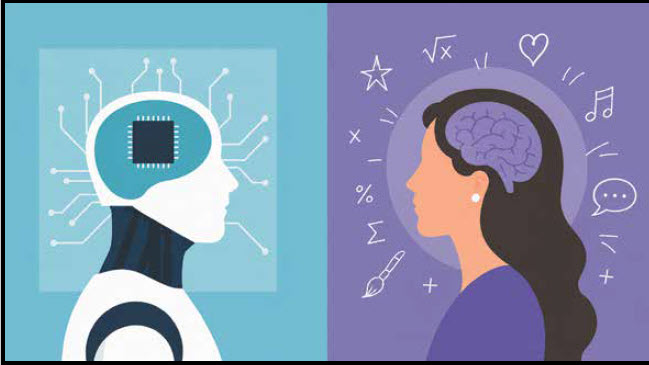
Artificial intelligence (AI) is rapidly reshaping how we work, learn, and engage the world. Recently, during a Chapel Talk sponsored by the Curtis Coleman Center for Religion, Leadership, and Culture at Athens State University, we explored what it means to be human in the age of AI, drawing upon the wisdom of Wendell Berry and the religious intellectual tradition. Yet perhaps a more fundamental question deserves our attention: How have we historically misunderstood what it means to be human, and might AI accelerate those misunderstandings? Four distinctions emerged from this reflection.
Dignity Over Productivity. Modern society frequently measures human worth through economic usefulness. But what happens when machines can perform work once assigned to human beings? If productivity determines value, do those whose labor is no longer needed become disposable? Human beings are not interchangeable cogs in an economic machine. The Christian doctrine of the imago Dei affirms that human dignity precedes productivity. Our worth is not determined by employment, income, or economic contribution. The economy and its technologies should serve human flourishing, rather than human beings existing to serve economic production.
Discernment Over Data. AI can analyze enormous amounts of information, recognize patterns, and generate predictions. Yet data can tell us what has happened without determining what ought to happen. Congresswoman Summer Lee warns that AI algorithms can enshrine biases already present in humankind. Consider documented wrongful arrests resulting from erroneous facial-recognition matches. These cases demonstrate the dangers of treating technological outputs as reliable judgments without adequate human scrutiny. When historical inequalities become embedded in automated systems, technology can accelerate rather than correct injustice. Discernment requires more than processing information; it demands moral judgment, accountability, and recognition of the dignity of those affected.
 Formation Over Frictionlessness. One promise of AI is the elimination of difficulty, but not every difficulty is an obstacle to human development. In Inside the Box, David Epstein explores how constraints and what researchers call desirable difficulties contribute to learning and growth. This resonates with Howard Thurman’s emphasis on wrestling with great ideas. Such wrestling develops patience, intellectual humility, critical judgment, and the capacity to reconsider our assumptions. At commencement, we rarely tell graduates simply to make enormous amounts of money. Instead, we encourage them to become responsible citizens, serve their communities, and make the world better. These are aspirations of formation, not merely information acquisition. We must be careful that in removing the struggle required to obtain information, we do not also eliminate the struggle through which human beings are formed.
Vocation Over Replacement. AI can also serve profoundly constructive purposes. Writing in Sojourners, Adam Nicholas Phillips imagines a nonprofit worker in Mississippi helping families navigate fragmented food-assistance programs. AI could organize information across multiple systems and identify families who qualify for assistance but remain overlooked. Yet the worker brings what technology cannot: personal relationships, community knowledge, trust, and moral responsibility. The machine helps identify the need; the human being knows how to respond. Her vocation is extended rather than replaced. This illustrates the larger question confronting us: Will technological advancement merely increase our capacity to produce, or will it deepen our capacity to care? Ultimately, becoming more technologically capable does not necessarily mean becoming more fully human. That depends upon how we value and treat one another.
Technological advancement does not necessarily constitute human advancement. As AI expands our capabilities, we must remain attentive to the ways our misunderstandings of human worth, knowledge, and responsibility may be reinforced rather than corrected. Ultimately, the measure of our progress is not simply what technology enables us to accomplish, but whether we are becoming more fully human in how we value, regard, and treat one another.
By: Dr Eric Betts