


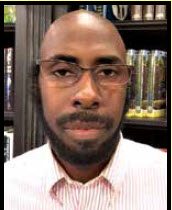
 By: Eric Betts
Leadership today demands more than charisma, instinct, or inherited authority. It requires a disciplined commitment to self‑improvement that is not optional, decorative, or “nice to have.” In a world where communities are navigating rapid change, misinformation, and widening gaps in opportunity, leaders who refuse to grow become liabilities to the very people they claim to serve.
Education—whether formal study, professional development, or intentional reading—is not an add‑on to leadership. It is the ethical foundation that keeps leaders honest, humble, and capable of guiding others with integrity.
Too often, we treat learning as something leaders pursue only when convenient, when the schedule lightens, or when a crisis forces it. But communities suffer when leaders operate on outdated assumptions, unexamined biases, or stale skill sets. Growth is not merely personal enrichment; it is stewardship. When a leader sharpens their mind, expands their understanding, or deepens their expertise, the benefits ripple outward. Teams become more effective. Organizations become more just. Communities become more resilient. The leader’s development becomes a public good.
This is especially true in professions that shape people’s lives—education, ministry, healthcare, public service. In these spaces, the refusal to grow is not neutral; it is harmful.
A leader who stops learning eventually stops listening. A leader who stops listening eventually stops serving. And a leader who stops serving eventually becomes more committed to protecting their position than empowering their people. Professional development, then, is not about climbing ladders or collecting certificates. It is about cultivating the moral imagination required to lead with clarity, compassion, and competence.
At its core, self‑improvement is an act of love. It says to the people we lead: “You matter enough for me to stay sharp.” It says to our teams: “Your work deserves a leader who is prepared.” And it says to our communities: “Your future is too important for me to lead on autopilot.”
When leaders embrace learning as an ethical imperative, they model the very transformation they hope to inspire. They remind us that growth is not a phase—it is a posture. And in a world hungry for trustworthy leadership, that posture may be the most powerful gift we can offer.
By: Eric Betts
Assistant Director, Curtis Coleman Center for Religion Leadership and Culture at Athens State University