

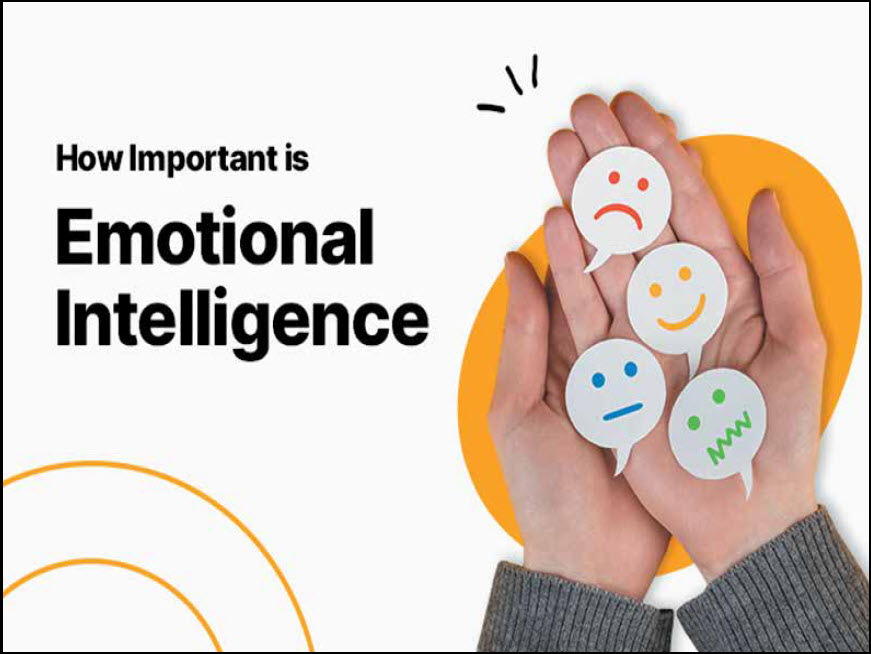
 By: Detri L. McGhee
A STORY: An upcoming retirement meant that the position she had worked toward for years was now opening. She was definitely the most qualified, educated, and knowledgeable — trained in every facet of the job. It was inconceivable that anyone else would be seriously considered. Everyone knew this. She could hardly contain her excitement when the day to announce the promotion arrived. Imagine her deep disappointment when a less trained employee was selected. Devastated. Crushed. Her manager was not surprised when she boldly asked to speak with him and practically demanded to know why she was passed over. Was it because they wanted a man? Was this person a relative of the owner? WHY? She was taken aback when the real reason was explained. “I’m sorry, but your relationship with your coworkers is not conducive to you being their leader. Your job performance is exemplary; your work is excellent… but you do not seem to relate to or understand your coworkers. You cannot take suggestions well, and when others make suggestions, you appear to be offended or just brush them off. We value you in the position you are in, but do not think you are ready for management. And, because we value you so much, we are giving you a nice raise.”
Unfortunately, because of her lack of EI maturity, she left angry, bitter and thinking she might resign. She blamed it on their prejudice because she was a woman. She thought of reasons the lost promotion was because of the actions or desires of others. And, she vowed to do as little as possible to help her new boss succeed.
Upon arriving home, she shared with all who would listen about her mistreatment. She continued her bitter attitude allowing it to infect and affect other relationships. She became even more difficult to be around for family, friends, coworkers, and even strangers.
Thankfully for her, EI training had become the new hot topic among wise management teams. And, after taking her company’s EI courses, she grew more mature in her thoughts, actions, and relationships. She caught on to what she was doing to sabotage her own success. Although it took several years for an appropriate advancement to become available, it was almost immediately that she began enjoying her job, her coworkers, and even her family more. Obviously her family and friends were also thankful for her changes in attitude, focus, and mindset.
Wouldn’t this have been a much happier story if she had been schooled on EI skills years earlier?
My special topic – the one I seek to consistently and thoroughly understand, seek solutions for, and apply is CRITICISM MANAGEMENT. CM tools and training on application are perhaps the single most effective tools for developing measurable Emotional Intelligence growth. Want to know more? Look for PART II in this very issue!
Detri would love to hear from you.Email:detrimcghee@gmail.com Facebook: Detri Atkinson McGhee Free outline for Criticism Management available at www.criticismmanagement.com
NOTE: Ali: Please put pic from Part I (OR A BETTER ONE! 😉😉) on top here. Thanks! I just drew this and it can certainly be improved upon, even if just to add color or boldness.
By Detri L McGhee, CLU, ChFC, B.Min
PART II: Let me explain why I believe that Criticism Management (CM) is the most crucial skill to the development of all the Emotional Intelligence skills. This one component can propel you swiftly toward your goals in life, whether personal, professional, spiritual, or physical, more than any other skill. Implementing the techniques of CM enable accomplishment of our goals with maximum speed and minimal pain. Along the way, you discover truths and tools that apply to your particular life that are not specifically addressed, yet these tools direct your thinking toward the thoughts and solutions you need to successfully maneuver through other scenarios.
Your unique situation brings forth unique challenges. Others can benefit from your experiences, just as learning from others can enable you to avoid sometimes huge mistakes. Learning from successes and failures of others is one of the quickest, safest, and least expensive ways to achieve your goals. Sometimes even small mistakes have MASSIVE consequences.
Let’s define Criticism Management to be sure we operate on the same frequency. But first: How do you define CRITICISM? Pen out, mind open: My Definition of Criticism Is: _____________________________
As you develop your definition, consider: Criticism is a lot like BEAUTY — It is in the eye of the beholder. What one person sees as a suggestion, another views as harsh criticism. To expand how we view the value and scope of Criticism Management skills, list related emotions, and actions that contain elements of real and/or perceived criticism. Open mind. Pen out. Go! ____________________________________
How many did you identify? I started with these: Complaints Suggestions Rebuke Guidance Rules Peer Pressure Correction Envy Instruction Opposition Reproof Bullying Teaching Knowledge Gripes Counsel Negativity Alternate Views Withholding Praise Belittling Lack of Encouragement Comments Questions Directions A Certain “look” Praise that belongs to you goes to another. (I have more!)
Think of situations that hurt your feelings, make you angry, or cause you to doubt yourself. What attitudes or actions make you change your position or views? What are your pet peeves or what does a family member, co-worker, boss, or stranger do that spoils your day or even your hour? An Emotionally Intelligent person decides ahead of time how they will respond, thus how much control over their own life they are willing to hand to anyone else, especially a stranger. We should seek to act vs react. To respond vs react.
Example: An unidentified driver cuts you off in heavy traffic, nearly causing a massive wreck. What is your response? “They think they own the road!” Or, #!@%*&. Then anger boils ups so when you get to your destination, everyone hears about it. Your family hears about it when you get home because you are still angry.
OR… Once you are over the wave of upset caused by a near tragedy, you say, “Thank You, God, for protecting me and all these other drivers!” And move on. How much of your time, energy, influence, and emotion will you give
them permission to take from you? Because, hopefully you already know that no one can dictate your actions or reactions without your permission. How long will you allow a harmful reflex feeling to linger with you? Does it really matter what their motives were? Should that affect your response? Choosing grace and forgiveness over anger, frustration or judgment blesses us & others whose space and time we often damage with our bad attitudes or actions. That driver will (hopefully!) never experience the anger or hatred you felt toward them, but others you share it with will. Therefore, it makes perfect sense to let our EI skills take over and do what is best for ourselves by refusing to give in to difficult situations with inappropriate and harmful responses. The fewer things we allow to fill us with negativity, the more developed our higher Emotional Intelligence rises.
Next visit, I’ll give you my definition of Criticism Management and examples of the difference developed CM skills can make. See you then!
Detri would love to hear from you. Email: detrimcghee@gmail.com Facebook: Detri Atkinson McGhee Free outline for Criticism Management available at www.criticismmanagement.com
By: Detri L. McGhee – CLU, ChFC, B.Min