
 By: Deb Kitchenmaster
Spring is coming around the corner. Yes, it’s time to get the shedding blades out and relieve our horses of their winter coats and provide our nest-building feathered friends with threads of our horses’ hair. Yet, in the midst of lengthened light in our day and warmth on our backs, we can have noticeable limps occurring right before our eyes. In the notice, questions come to mind like, “What is causing my horse to be unwilling or unable to put weight on a particular leg?” You can be picking out one of your horse’s hooves and notice an increased level of heat in the hoof and question, “Where is this coming from?” You may be running your hand down the horse’s leg between the coronary bands and the fetlock and feel an elevated digital pulse and question this awareness. The digital pulse is important because it can tell you what’s happening in the hoof. It may be as simple as a stone bruise, or it can be an issue with laminitis or an abscess discovery.
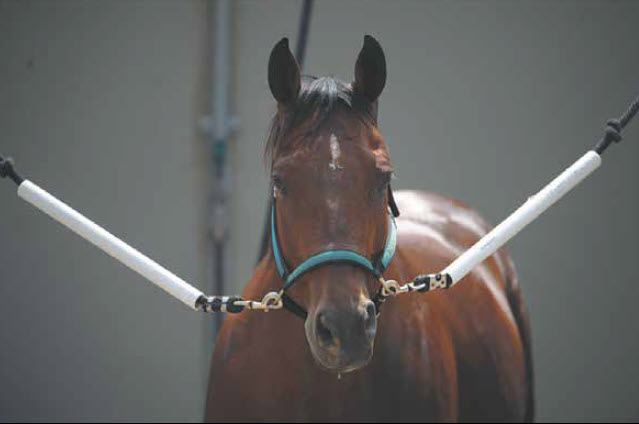
To find your horses’ digital pulse, move your pointer finger and your middle finger towards the back of the pastern, applying some pressure until you find a little groove. (At this point, you can start singing “groovy” and feel good about yourself that you are using your middle finger in an appropriate way… Just kidding). The groove will be roughly over the outer edge of the heel bulbs. You can roll your fingers over this area until you find a slight pulse. Note to self: if you press too hard, you will pinch it off, and not enough pressure, you won’t find it. Each leg will have two little groovy areas to find a pulse. Be sure to check both sides on each hoof. Always do this when your horse is secured in the crossties or someone is holding him. Here is a simple safety note, as you squat down, don’t put your knee on the ground, just in case you need to jump up and move quickly out of the way. Another way to locate the digital pulse (a little higher) is the fetlock area.
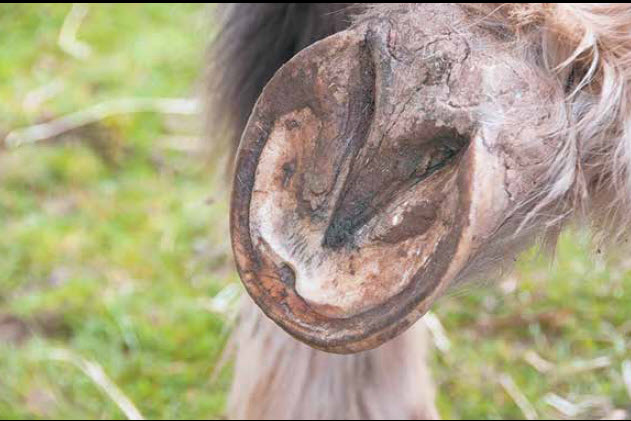
 Let’s say you find out that your horse has an abscess. What is an abscess? How do you treat an abscess? A hoof abscess is an infection that gets trapped in the foot and forms a pocket of pus. This builds up pressure and brings discomfort to the horse. Remember the hoof is a fixed structure that has limited expansion. The hoof is made up of an outer hoof wall which is visible to the human eye and the tissue layer (laminae) that connects the hoof wall to the coffin bone. A horse hoof abscess can form when bacteria enters cracks or gaps. You will most likely see this limp due to an abscess in springtime and in the fall season. Developing proper hoof care routinely, seeing a good ferrier every 8 weeks, will help prevent hoof abscesses.
Once the diagnosis is clear, first of all, it will be necessary to de-shod the horses’ foot. If the abscess is ripe, the vet or ferrier will be able to dig out the horn to the abscess. Once the abscess is pierced, a black foul-smelling pus pocket will spill out and give the horse instant relief. If not ripe, apply poultices to the foot. The most common poultice is made from linseed. This poultice helps to mature the abscess and soften the horn. The poultice needs to be changed daily until break through. Once the abscess has broken through, antiseptic solutions should be applied daily to clean the wound. Some horse people will use a bleach bath on the hoof because the bleach removes the bacteria causing the infection.
Enjoy your spring. Enjoy your horse. Enjoy your Creator, yourself, and each other. Simply enjoy.
Your NEIGHbor,
Deb Kitchenmaster