

 By: D. A. Slinkard
I have always found it interesting how people can be dissatisfied with where they are in life, yet be completely unwilling to change anything about how they are living. They want different results, but they keep following the same routine. They want to accomplish more, but they continue making the same excuses. They want tomorrow to look different from yesterday, but they do absolutely nothing different today. I think about the definition of insanity, and it is doing the same thing over and over again expecting a different result. If we want things to be different, then we must be willing to try different things.
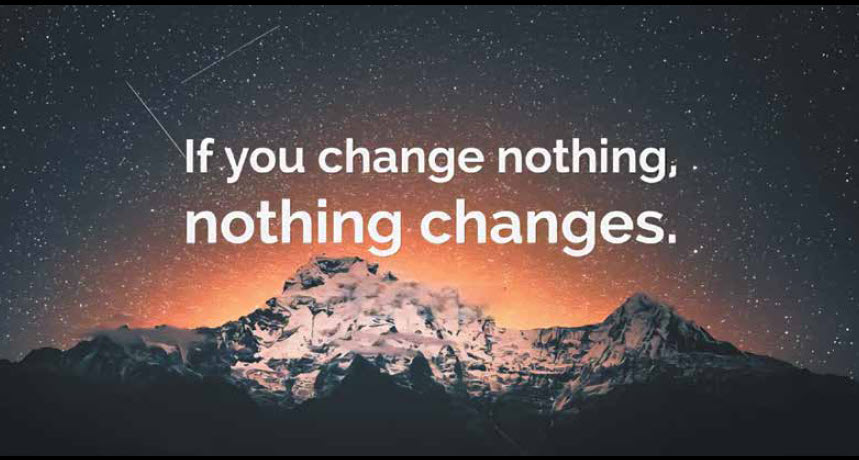
There is an old saying that I believe contains a tremendous amount of truth: “If nothing changes, nothing changes.” I want you to think about that statement for a moment. It is incredibly simple, yet it explains why so many people find themselves in the exact same place year after year.
We sometimes convince ourselves that things will eventually get better simply because time passes. However, the passing of time does not automatically produce improvement. Just because another year goes by does not mean we have grown, learned, matured, or accomplished anything. The reality is that change usually requires a decision, and that decision must eventually be followed by action.
One of the keys to having success in life is knowing when to draw that proverbial line in the sand and say, “Enough is enough!” The problem, however, is that many of us do not know where to draw that line, and oftentimes, by the time we finally decide to draw it, we have already waited too long. Instead of being proactive, we find ourselves being reactive.
This is a dangerous place to be because when we spend our lives constantly reacting to whatever comes our way, we allow our circumstances to dictate our decisions. Rather than taking charge of our lives, we find ourselves simply trying to keep up with everything that is happening around us. We find ourselves just treading water… and eventually we are going to sink.
Think about how often this happens. We wait until our finances are in trouble before we decide to establish a budget. We wait until our health begins to deteriorate before we start taking better care of ourselves. We wait until relationships are strained before we decide to invest time in them. We wait until we are completely overwhelmed before we realize that something in our lives needs to change.
The sad reality is that many of these situations did not develop overnight. They were the result of little decisions, neglected responsibilities, and warning signs that we chose to ignore along the way. I have learned that there is a tremendous difference between making a decision because you recognize something needs to change and making a decision because you have finally run out of options. One is proactive. The other is reactive.
Now, do not misunderstand me – life is always going to throw things our way that we cannot anticipate or control. There will be unexpected problems, disappointments, and circumstances that require us to react. However, there is a difference between responding to an unexpected situation and living our entire lives in a constant state of reaction.
We cannot always control what happens to us, but we can take responsibility for what we do next. Sometimes success begins with a simple decision that we are no longer going to continue doing things the way we have always done them. We are going to stop making excuses, stop putting things off, and stop waiting for circumstances to force us into making changes that we should have made long ago.
After all, if we know something needs to change, why wait until it gets worse before we do something about it? Yet, this is exactly how many of us live our lives. We wait until the situation has spiraled out of control before we finally decide that something needs to be done. We ignore the warning signs, convince ourselves that things will eventually get better, and continue doing the very things that contributed to the problem in the first place.
The reality is that problems rarely fix themselves, and time alone does not guarantee improvement. Many times the longer we wait to address something, the more difficult it becomes to correct. Eventually, we have to stop waiting for things to change and start making the changes that are within our control, and we have to understand that if nothing changes, nothing changes.
By: D. A. Slinkard
D.A. Slinkard would love your feedback. You can contact him at da.slinkard@gmail.com